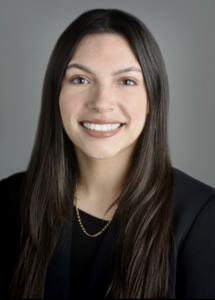
BA Biology, Writing Minor, BHM Minor

Q: What are you currently doing?

A:  I am currently in Charlotte, NC working as a Research Coordinator for the Center of Health System Sciences at Atrium Health. I get to work on a variety of studies focused on health services and health equity, particularly recruiting for qualitative research. I am excited to apply to medical school this upcoming cycle as I work towards becoming a physician-researcher.  The BHM minor provided me with a holistic education, and I still apply principles of bioethics on a daily basis as I seek to make clinical research accessible to participants.

Q: What can you share about the impact of the BHM minor or the importance of the minor in preparing you for life beyond Wake Forest?

A:  The BHM minor provided me with the opportunity to engage in a wide range of courses- from health communication to humanities in medicine- that expanded my knowledge of bioethical principles and their applications.

Q: Do you have a favorite memory about Wake Forest or a particular class or anything else you would like to share?

A:  Recently, I’ve reflected on the health communications course I took with Dr. Canzona. In my current role, I assist with developing patient-facing documents, such as patient newsletters or recruitment scripts. In addition to what I learned during the course, I am seeking out additional training in health literacy and plain language writing to ensure that the documents our study team delivers to patients are accessible and easy to understand.

Q: Is there anything that you particularly enjoy about your current position that you would like to share?

A:  As a research coordinator, I get to work on trials with interdisciplinary teams to learn how to improve patient outcomes. I engage with PharmDs, community health workers, primary care providers, and the research team. It is amazing to learn from these professionals and hear uplifting stories from patients on how a research study has impacted their lives.
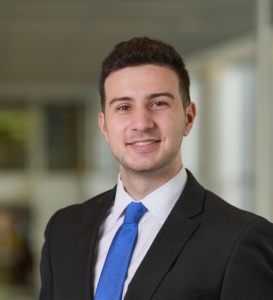
BA History, BHM Minor ~ MA Bioethics, 2023
Q: What are you currently doing?

A:  I am a Program Manager at the Indiana University Center for Bioethics and the Indiana Clinical and Translational Sciences Institute. Basically, I oversee the day-to-day workflows of an academic research center, and at the ICTSI, I run a program called the Bioethics and Subject Advocacy Program (BSAP). Through BSAP I run a research ethics consultation service for biomedical investigators across Indiana who need ethics expertise. Sometimes it’s because they need help creating a data safety monitoring plan, other times they want guidance on how to appropriately return individual research results to participants.

Q: How did your time at Wake Forest and your involvement with the BHM minor (or related courses) shape your path after graduation?

A:  When I came to Wake, I didn’t have a clear picture of what career I wanted to pursue. My solution was to try a little bit of everything, but what I enjoyed most were classes like History of American Medicine, which took an interdisciplinary approach to understanding the people, ideas, and institutions that built our healthcare system. The BHM courses I took in undergrad provided a strong foundation for my Master’s in Bioethics, without which I wouldn’t have many of the competencies needed to succeed in my role today, like how to write analytically and persuasively. In bioethics, along with all of academia, there is a substantial amount of “required reading” that you’ll need to know to have any meaningful conversation about a given topic. I simply wouldn’t have been considered for my job if I didn’t have this training.

Q: What have been some of your most meaningful experiences since leaving Wake?

A:  My career highlight so far has been my presentation at ASBH 2024, where I appeared on a panel to present original research on deliberative democratic approaches to biobanking policy. It was a great experience and was the first time that I felt I had “made it.” Beyond that, I have also done some teaching as a guest lecturer. My favorite lecture is a presentation on historic cases in research ethics, where I explore some of the key moments that changed how we think about the “right” and “wrong” ways to do research with human subjects.

Q:  Do you have any advice for current Wake students who are interested in bioethics, health, or related fields?

A:  Make a plan. It took me a while to figure out what was important to me and how I could build a career around that. Take some time to reflect on what motivates you, what you’re passionate about, and find a way to make a living doing that.

Be curious! If you’re thinking about going into medicine, law, health policy, or any of the adjacent fields, consider taking any of the classes in the BHM minor that speak to you. Best case, you’ll study a subject that you enjoy and makes you better prepared for life’s challenges (and a more competitive applicant for whatever you choose to do next). Worst case, you spend 3 credit hours out of 120 learning about something interesting.

Lock in. Your most valuable asset is your time. Wake is a fun place to be, but make sure you’re spending enough time preparing for life after Wake.

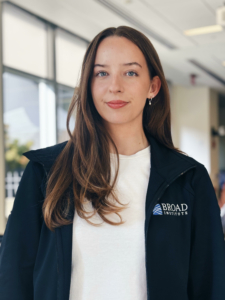
Biochemistry and Molecular Biology Major, BHM Minor, Spanish Minor

Q: Why did you choose the BHM Minor?

A:   I originally chose the Bioethics minor due to its applications in the medical field. After learning about some of the historic atrocities that occurred in the medical and research space, I was motivated to dive deeper into the physician’s duties to autonomy, beneficence, non-maleficence, and justice. The variety of elective options and topics to explore in the bioethics minor was amazing and I got to take courses in counseling, communications, ethics, history, and more -all surrounding the applications of bioethics in medicine, history, and research.

Q: How did the classes you took as a BHM Minor prepare you for what you are doing now?

A:  Discussion and project-based activities in my minor courses made it easy for me to gain genuine interest in the topics and their applications to the real world.  Many of the bioethical topics I learned about at Wake apply to the research I do.

Q: Where are you now and what are you doing?

A:  Now, I am doing cancer therapeutic research in the PRISM lab at the Broad Institute of MIT and Harvard.  Specifically, this includes research involving organoids, embryoids, animal research, and clinical trials. Diversifying my knowledge and research experiences to encompass bioethics in undergrad certainly contributes to my success in the research field now. My year has been exciting so far with my labs recent advances in multiplexed genetic sequencing assays.  Recently, my work at the Broad Institute involves using bioautomation and robotics to improve benchside research outcomes.


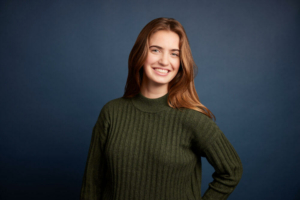
English Major, BHM Minor, Anthropology Minor
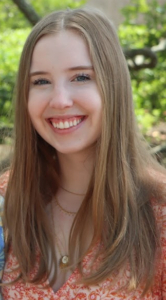
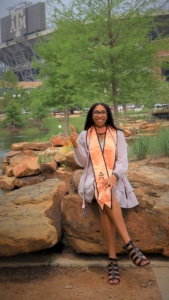
Q: What have you been up to since graduation?

A:  I’m working at the Ash Center for Democratic Governance and Innovation at the Harvard Kennedy School as the Center’s Communications Coordinator, so my job involves a lot of reading different policy recommendations/research and creating succinct content to disperse to our various audiences.  We also just launched our new website, a project that my team spearheaded, to ensure that our online presence matches the quality of work that we’re doing.

Q: How did the classes you took as a BHM Minor prepare you for what you are doing now?

A:  During my time as an undergrad at Wake, my BHM courses were some of my favorite classes I ever took. Not only did I find them fascinating, but these classes first exposed me to how policymaking can have an impact on everyday people, for better or worse. I now make decisions about my career trajectory leading with that policy focus, and my BHM minor inspired that interest.

Q: Is there anything else you would like to add about the BHM Minor?

A:  These classes showed me that if a tub of water is overflowing, you don’t just continue to mop up the overflown water (or put a Band-Aid on the problem at hand), you turn off the faucet (address the reasons for why this problem is happening in the first place). These courses also elevated my critical thinking abilities, a skill set that without which, I wouldn’t be where I am today.

Psychology Major, BHM Minor, Linguistics Minor

Q: What have you been up to since graduation?

A: I am up in Boston getting my masters in speech-language pathology at Boston University. I am working in BU’s Aphasia Resource Center as a student clinician and I hope to end up working with adults with post-stroke aphasia in outpatient rehab.  I also had a placement at Newton North High School focusing on AAC communication for students identified with autism. My new position will be at Mass General Hospital in outpatient neurology focusing on Functional Neurological Disorders, specifically Parkinson’s Disease.


Q: What impact has the BHM minor had in preparing you for life beyond Wake Forest ?

A:  The classes under the BHM minor introduced me to how to approach ethical dilemmas and how important self-advocacy is, and it truly shaped my passions and interests in the field of speech-language pathology. I learned how to approach very complex ethical scenarios with an open mind and how to ask meaningful questions to consider every perspective. The nature of this interdisciplinary minor made it obvious just how necessary ethics are in every field, and helped me form these connections across disciplines to deepen my learning. Sure I learned a lot about organ transplants, DNRs, and genome editing (all exciting and useful information!!), but what was most valuable about the minor is that it truly taught me how to think about problems that we will all face at some point or another in our careers. I had a fantastic experience in every class I took within this minor and I don’t think I can say enough good things about it.


Q: Do you have a favorite memory about Wake Forest or a particular class or anything else you would like to share?

A:  I am so proud to have graduated from Wake Forest and I am so lucky to have so many amazing memories to look back on. One of my favorite memories are the relationships that I formed with the students in the psychology honors cohort. After we had finished defending our theses, we gathered at Dr. Debbie Best’s house for dinner. It was such a special moment to celebrate our hard work and a true sense of community. It was such a unique experience that embodies so much of what Wake Forest stands for.

Health & Exercise Science Major, BHM Minor

Q: What have you been up to since graduating in 2021?

A:I have completed my Masters of Public Health (MPH) at Texas A&M University and am now in the first year of my Doctorate of Public Health (DrPH) at A&M.  I have a concentration in Health Behavior and am currently focusing on maternal and child health studies. My research focuses on maternal and child health, reproductive justice, and health inequities. After completing my DrPH, I hope to find a professor position and start my own non-profit that provides comprehensive sexual and reproductive education to teenagers and adults, as well as providing advocacy for women of color as they navigate their reproductive lives.


Q: What impact has the BHM minor had in preparing you for life beyond Wake Forest ?

A:  I can say that the minor is single-handedly responsible for where I am now.  The BHM minor allowed me to explore the philosophy, history, and ethics of many health disparities and issues. Beyond that, the classes I took for the minor laid the groundwork for my public health education, and gave me a “leg up” during my masters and now during my doctoral program.  The BHM minor is really where I found what I was passionate about. I knew that I wanted to focus on minority reproductive health, but I was not sure how to focus that in or what exactly I wanted to do with the interest. Classes like Sickness and Health in American History and Gender and the Politics of Health helped me learn more about the interest, its historical context, and how to research more about it.


Q: Do you have a favorite memory about Wake Forest or a particular class or anything else you would like to share?

A:  One of my favorite memories about Wake Forest was orientation week. During orientation week, I met a lot of the people who would go on to be my lifelong friends and it’s truly when I fell in love with Wake. I got to learn more about the school and what my life would be like while I was there, it made the difficult time of moving away from my parents a little easier.