
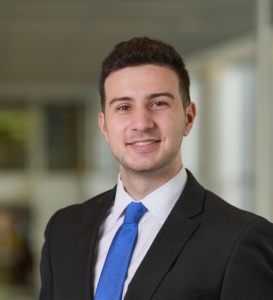
 BA History, BHM Minor ~ MA Bioethics, 2023
Q: What are you currently doing?
A: I am a Program Manager at the Indiana University Center for Bioethics and the Indiana Clinical and Translational Sciences Institute. Basically, I oversee the day-to-day workflows of an academic research center, and at the ICTSI, I run a program called the Bioethics and Subject Advocacy Program (BSAP). Through BSAP I run a research ethics consultation service for biomedical investigators across Indiana who need ethics expertise. Sometimes it’s because they need help creating a data safety monitoring plan, other times they want guidance on how to appropriately return individual research results to participants.
Q: How did your time at Wake Forest and your involvement with the BHM minor (or related courses) shape your path after graduation?
A: When I came to Wake, I didn’t have a clear picture of what career I wanted to pursue. My solution was to try a little bit of everything, but what I enjoyed most were classes like History of American Medicine, which took an interdisciplinary approach to understanding the people, ideas, and institutions that built our healthcare system. The BHM courses I took in undergrad provided a strong foundation for my Master’s in Bioethics, without which I wouldn’t have many of the competencies needed to succeed in my role today, like how to write analytically and persuasively. In bioethics, along with all of academia, there is a substantial amount of “required reading” that you’ll need to know to have any meaningful conversation about a given topic. I simply wouldn’t have been considered for my job if I didn’t have this training.
Q: What have been some of your most meaningful experiences since leaving Wake?
A: My career highlight so far has been my presentation at ASBH 2024, where I appeared on a panel to present original research on deliberative democratic approaches to biobanking policy. It was a great experience and was the first time that I felt I had “made it.” Beyond that, I have also done some teaching as a guest lecturer. My favorite lecture is a presentation on historic cases in research ethics, where I explore some of the key moments that changed how we think about the “right” and “wrong” ways to do research with human subjects.
Q: Do you have any advice for current Wake students who are interested in bioethics, health, or related fields?
A: Make a plan. It took me a while to figure out what was important to me and how I could build a career around that. Take some time to reflect on what motivates you, what you’re passionate about, and find a way to make a living doing that.
Be curious! If you’re thinking about going into medicine, law, health policy, or any of the adjacent fields, consider taking any of the classes in the BHM minor that speak to you. Best case, you’ll study a subject that you enjoy and makes you better prepared for life’s challenges (and a more competitive applicant for whatever you choose to do next). Worst case, you spend 3 credit hours out of 120 learning about something interesting.
Lock in. Your most valuable asset is your time. Wake is a fun place to be, but make sure you’re spending enough time preparing for life after Wake.
